Recursos de compra por caja
Chinese Tea by the Case: A Buying Guide
If you operate a Chinese restaurant, bubble tea shop, convenience store, or a WeChat group-buy, the fastest way to stock Chinese tea is to order ready-to-drink (RTD) bottled tea by the case — typically 12 to 15 bottles per case for 300-500ml bottles — which drops your per-bottle cost well below unit retail and gives you 9-12 months of ambient shelf life. This guide covers exactly what is in a case of Chinese tea, how many bottles you get, how to price for resale, and how to store it, using the jasmine green, oolong, and milk tea formats we actually stock and ship from California.
Puntos clave
- •Most RTD Chinese tea ships in cases of 12-15 bottles (500ml tea, 300ml milk tea); that case-pack count is the number you build all your pricing math on.
- •Sealed bottled tea is shelf-stable at room temperature for roughly 9-12 months unsealed — no cold chain needed in storage, only chill before serving.
- •Oolong (CP, SUNTORY) and jasmine green (Farmer Spring) are the fastest-turning RTD formats for restaurants and stores; milk tea (300ml) sells fastest in convenience stores and WeChat drops.
- •Price for resale by adding your target margin to per-bottle case cost — a case bought by the case and split among buyers is the clearest 'by-the-case vs unit retail' saving you can show them.
- •Bundle a tea/juice case with a snack case to build a complete WeChat group-buy drop that ships in one box and splits cleanly among members.
What is actually in a case of Chinese tea
A case of Chinese tea is not loose leaf — for foodservice and resale, the practical format is ready-to-drink (RTD) bottled tea: sealed PET bottles you can put straight on a shelf, in a cooler, or on a restaurant table. This is what moves in volume because there is no brewing, no waste, and a long shelf life. We stock RTD bottled tea (not teabags or loose-leaf sachets), so the case math below is built on bottles.
A standard case holds a fixed bottle count, and that number is the single most important figure for your pricing. For our 500ml flavored and unsweetened teas, a case is commonly 15 bottles; for 300ml milk tea, a case is commonly 12 bottles. Always confirm the case-pack count on the product page before you build a quote, because it varies by SKU and bottle size.
- •RTD bottled tea (500ml): sealed PET, ambient-stable, the workhorse for restaurants and store coolers — sold by the case.
- •Milk tea (300ml): smaller bottle, impulse-friendly price point, ideal for convenience-store coolers and WeChat drops.
- •Case-pack counts you will see: ~15 bottles per case for 500ml tea, ~12 bottles per case for 300ml milk tea — confirm per SKU.
- •Browse live case packs and counts under /category/tea and the parent /category/beverages.
Jasmine green tea cases: units per case and best use
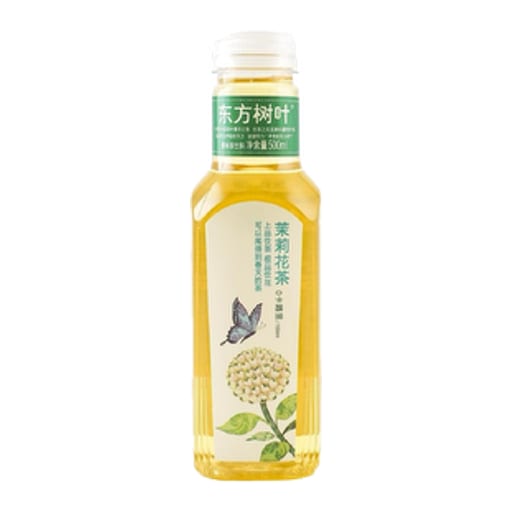
Jasmine green tea is the safest, broadest seller in the Chinese tea category — familiar to nearly every customer and equally at home as restaurant table tea or a grab-and-go bottle. Our Farmer Spring Eastern Leaves jasmine line ships in 500ml bottles, commonly 15 per case, so a single case covers 15 servings (one bottle each) or, decanted, a full lunch service of free table tea.
How to choose between restaurant use and retail resale comes down to bottle handling. For restaurant table service, a case of 15 bottles is roughly one to two days of tea for a small dining room, and you save staff time versus brewing. For retail resale or a WeChat drop, the same case of 15 becomes 15 individually sellable units — you mark each bottle up over the per-bottle case cost and the margin is clean and easy to explain to buyers.
- •Jasmine green (e.g. Farmer Spring Eastern Leaves): 500ml, ~15 bottles per case — the lowest-risk starter case for any new reseller.
- •Restaurant use: one case ≈ one to two days of table tea for a small dining room; no brewing labor.
- •Retail/WeChat: 15 sellable units per case; mark up per bottle for a clear by-the-case margin.
- •Start with one jasmine case to test turnover before committing to multi-case orders.
Oolong and herbal teas: case economics and what sells fastest
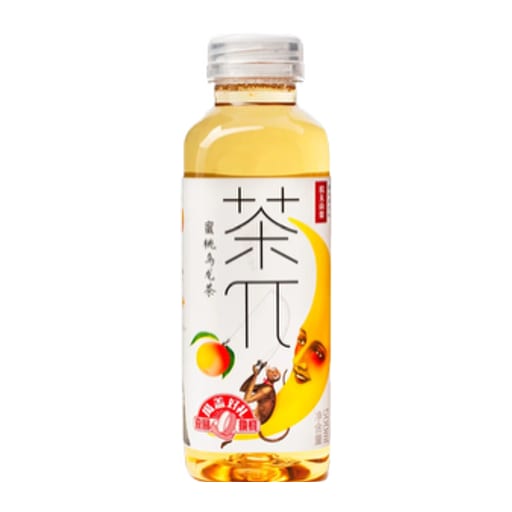
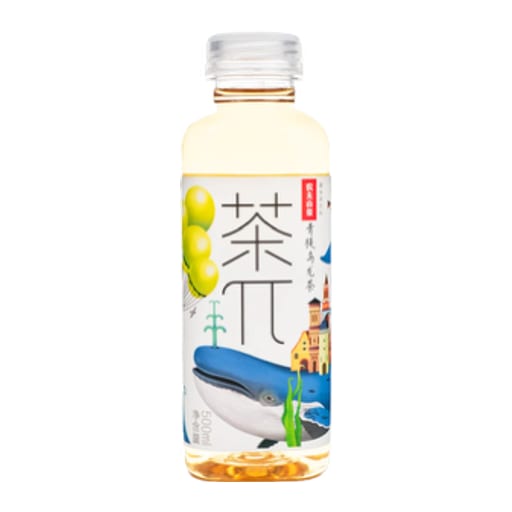
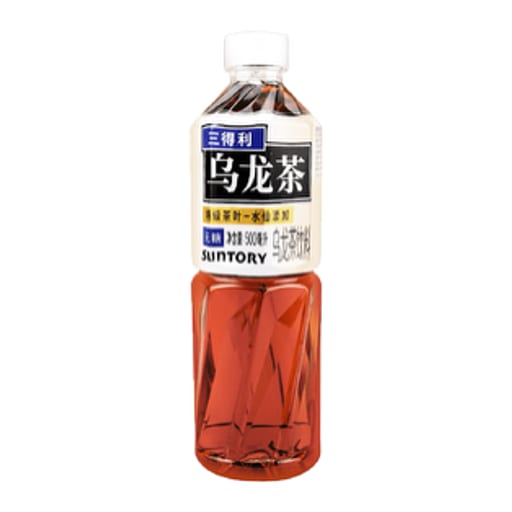
Oolong is the fastest-turning RTD tea format we see for stores and bubble tea adjacencies, because it spans both sweetened flavor profiles and clean unsweetened options. We stock CP Peach Oolong and CP Grape Oolong (500ml, ~15 per case) for the flavored, impulse-buy shelf, and SUNTORY Sugar-Free and Low-Sugar Oolong (500ml, ~15 per case) for the growing unsweetened, low-sugar demand. Stocking one flavored case and one unsweetened case covers two distinct buyers from the same order.
Beyond classic oolong, herbal and specialty RTD teas — like Pu'er and tangerine-peel white tea (Farmer Spring, 500ml) — round out a shelf for customers who want something less common. These move slower than jasmine or oolong, so treat them as a one-case test, not a deep stock. The case economics are the same: divide the case price by the bottle count to get your true per-bottle cost, then price up from there.
- •Flavored oolong (CP Peach, CP Grape): 500ml, ~15 per case — strongest impulse / flavor-shelf performer.
- •Unsweetened oolong (SUNTORY Sugar-Free / Low-Sugar): 500ml, ~15 per case — captures the low-sugar buyer.
- •Specialty/herbal (Pu'er, tangerine-peel white): slower movers — stock one case to test, don't over-order.
- •Always compute per-bottle cost = case price ÷ bottles per case before quoting a resale price.
Milk tea and juice cases: stocking a mini-mart or WeChat drop
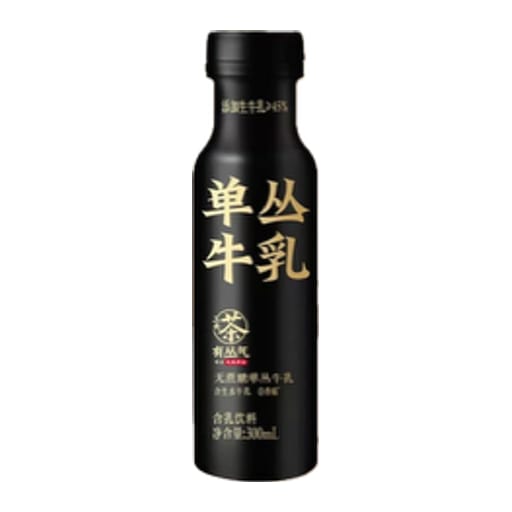
Milk tea is the impulse engine for convenience stores and WeChat group-buys. Our milk tea (e.g. YCQ Phoenix Milk Tea) ships in 300ml bottles, commonly 12 per case — the smaller bottle hits a lower per-unit price that customers add to a cart without thinking. For a mini-mart cooler, one or two cases keeps the shelf full; for a WeChat drop, a 12-bottle case splits neatly among a handful of group members.
Juice rounds out a beverage order for families and kids, and it pairs naturally with tea in a single shipment. Stocking a mix of tea, milk tea, and juice from one supplier means one box, one freight cost, and one invoice — which is exactly what makes a WeChat group-buy worth running. Browse the live options under /category/milk-drinks, /category/juice, and /category/soft-drinks to assemble a beverage spread.
- •Milk tea (e.g. YCQ Phoenix): 300ml, ~12 per case — the convenience-store and WeChat impulse pick.
- •Juice (/category/juice): family- and kid-friendly; pairs with tea in one shipment to spread freight cost.
- •Soft drinks (/category/soft-drinks): add for a complete cooler spread alongside tea and milk tea.
- •One supplier, one box, one invoice = the economics that make a WeChat beverage drop worth organizing.
Shelf life and cold-chain requirements by format
The single biggest advantage of RTD bottled tea over fresh-brewed or perishable drinks is that it is shelf-stable. Sealed bottles store at normal room temperature, so you do not need refrigerated storage or a cold chain in your stockroom — only chill bottles before serving or selling cold. As a working rule, unopened bottled tea, milk tea, and juice carry roughly a 9-12 month shelf life from production; always read the printed date on the case and rotate first-in-first-out.
This shelf-stability is what makes by-the-case ordering low-risk: you can buy several cases, keep them in a dry stockroom, and sell through them over months without spoilage, as long as you keep bottles out of direct heat and sun. Once a bottle is opened it should be refrigerated and consumed within a day or two, but that is a serving concern, not a storage one — your unopened case inventory stays stable on the shelf.
- •Storage: ambient, dry, out of direct sun/heat — no refrigeration needed for sealed cases.
- •Cold chain: only required at the point of serving/selling cold, not in storage.
- •Shelf life: roughly 9-12 months unopened for bottled tea, milk tea, and juice — verify the printed date and rotate FIFO.
- •Once opened: refrigerate and use within a day or two (a serving rule, not a storage one).
How to price a case of Chinese tea for resale or your shelf
Pricing starts with one number: per-bottle case cost = case price ÷ bottles per case. For a 15-bottle case of 500ml tea, divide the case price by 15; for a 12-bottle case of 300ml milk tea, divide by 12. That figure is your floor — every resale price you set sits above it, and the gap is your margin.
For a WeChat group-buy, the cleanest model is to pass the case through at per-bottle cost plus a flat per-bottle markup, so every member sees the same transparent price and understands they are paying a by-the-case rate rather than unit retail. For a store shelf, set a round retail price per bottle that comfortably clears your per-bottle cost plus shrink and handling. The honest pitch to your buyers is simple: buying by the case lands each bottle at the cost it works out to inside the case — that case-vs-unit gap is the real saving, and you can show the math.
- •Step 1: per-bottle cost = case price ÷ case-pack count (e.g. ÷15 for 500ml tea, ÷12 for 300ml milk tea).
- •WeChat resale: per-bottle cost + flat markup, same price for every member — transparent and easy to explain.
- •Store shelf: round per-bottle retail that clears cost + shrink + handling.
- •The pitch: 'by the case vs one-at-a-time retail' is the honest, demonstrable saving — never invent a percentage you can't show.
Bundling beverages with snacks for a complete WeChat drop
A tea case rarely travels alone. The most efficient WeChat group-buy drop bundles a beverage case (tea, milk tea, or juice) with a snack case so members get a complete order in one shipment — which spreads the freight cost across more units and makes the per-member price more attractive. A common pattern is one tea case plus one snack case (for example a spicy-vegan-snack or cookie case) shipped together.
When you assemble the drop, keep the math member-friendly: a 15-bottle tea case splits cleanly across 15 members or 5 members at 3 bottles each, and a snack case adds a second item to each member's share. The goal is a single box that arrives once, splits without leftovers, and gives every WeChat member a tea-plus-snack bundle at a clear by-the-case price. Browse beverages under /category/beverages to anchor the drink half of the bundle.
- •Bundle a beverage case (/category/tea, /category/milk-drinks, /category/juice) with a snack case in one shipment.
- •One box, one freight cost — split across more units lowers the effective per-member price.
- •Plan splits that divide cleanly: a 15-bottle case = 15 shares of 1, or 5 shares of 3, with no leftovers.
- •The deliverable: a single drop where every member gets a tea-plus-snack bundle at a by-the-case rate.
Preguntas frecuentes
How many bottles are in a case of Chinese tea?
It depends on bottle size. Our 500ml teas (jasmine green, oolong, flavored) commonly come 15 bottles per case, and 300ml milk tea commonly comes 12 per case. The case-pack count is listed on each product page — always confirm it there before building your resale pricing, since it varies by SKU.
Do I need refrigeration to store tea by the case?
No. Sealed RTD bottled tea, milk tea, and juice are shelf-stable and store at normal room temperature in a dry stockroom out of direct sun and heat. You only need to chill bottles before serving or selling them cold. Refrigeration is a serving step, not a storage requirement, which is what makes by-the-case ordering low-risk.
How long does bottled Chinese tea last?
Unopened bottled tea, milk tea, and juice generally carry a shelf life of roughly 9-12 months from production. Always read the printed date on the case and sell or use oldest stock first (first-in-first-out). Once a bottle is opened, refrigerate it and finish it within a day or two.
Which Chinese tea sells fastest for a store or restaurant?
Jasmine green tea is the broadest, lowest-risk seller and works as both restaurant table tea and a retail bottle. Oolong turns fast too, especially when you stock both a flavored option (like CP Peach or Grape Oolong) and an unsweetened one (like SUNTORY Sugar-Free Oolong) to cover two buyer types. For convenience stores and WeChat drops, 300ml milk tea is the strongest impulse pick.
How do I price a tea case for WeChat resale?
Start with per-bottle cost = case price ÷ bottles per case (for example, divide a 500ml tea case price by 15). Then add a flat per-bottle markup so every group member pays the same transparent price. The honest selling point is the by-the-case versus one-at-a-time retail gap — each bottle lands below single-unit retail, and you can show the math rather than quoting an invented percentage.
Can I combine tea with snacks in one order?
Yes, and it is the smartest way to run a WeChat group-buy. Bundle a beverage case (tea, milk tea, or juice) with a snack case so members get a complete order in one shipment. One box means one freight cost spread across more units, lowering the effective per-member price. Plan splits that divide cleanly — a 15-bottle case shares evenly among 15 members or 5 members at 3 bottles each.